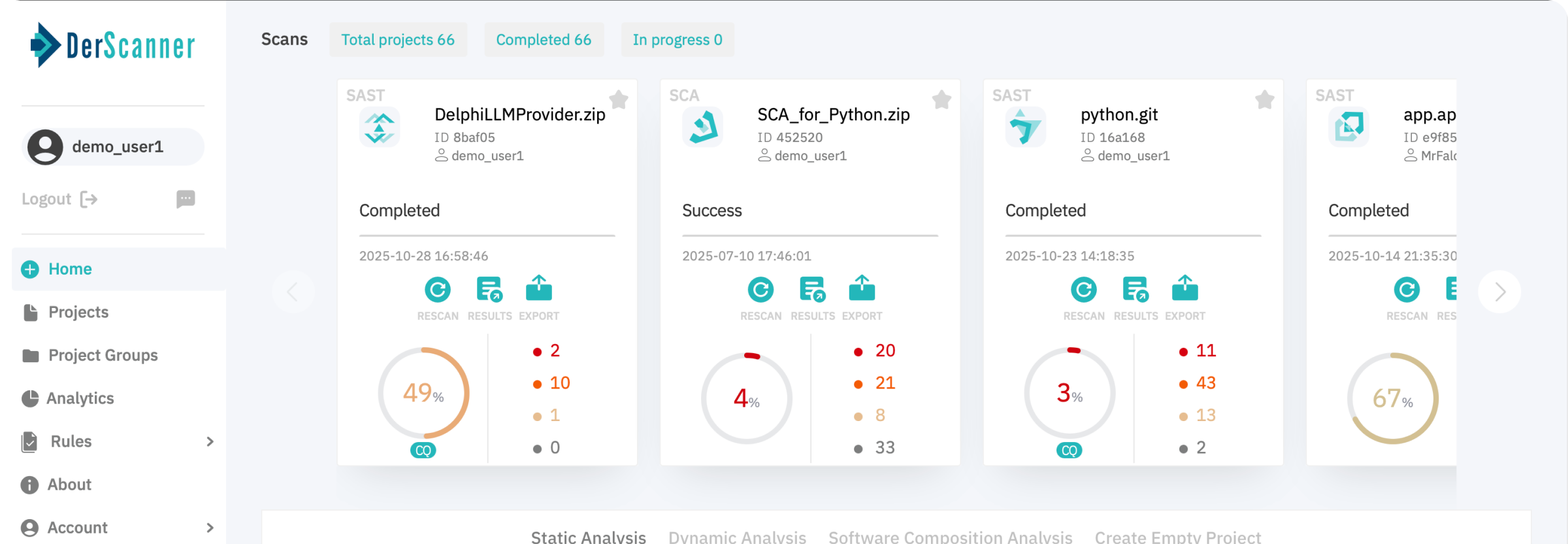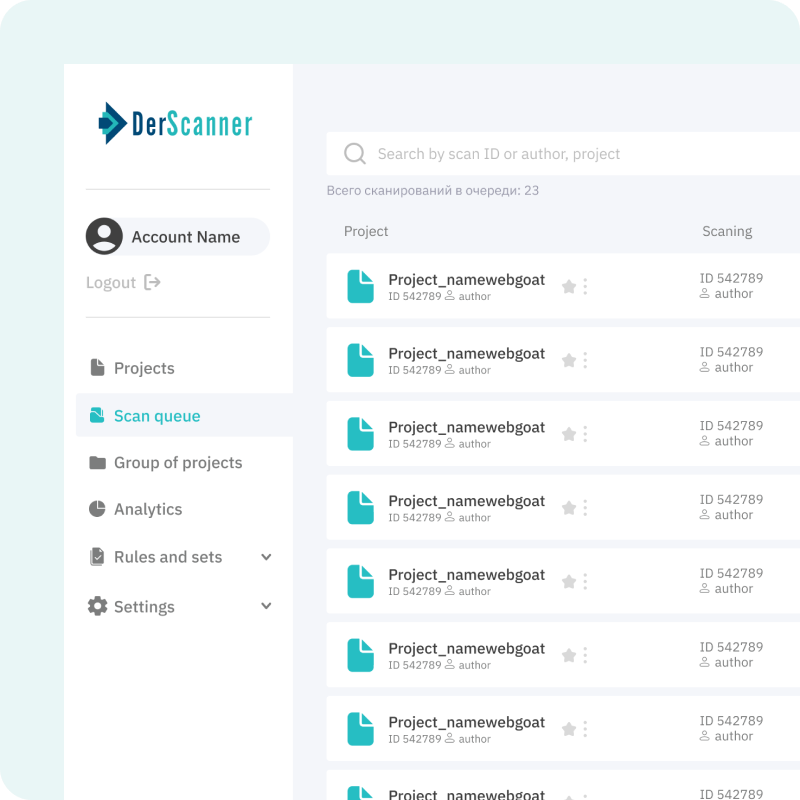
Staging-First Scanning
DerScanner DAST is designed to run against staging or pre-production environments where active payloads can probe the application thoroughly without disrupting the traffic.

for Live Web Applications
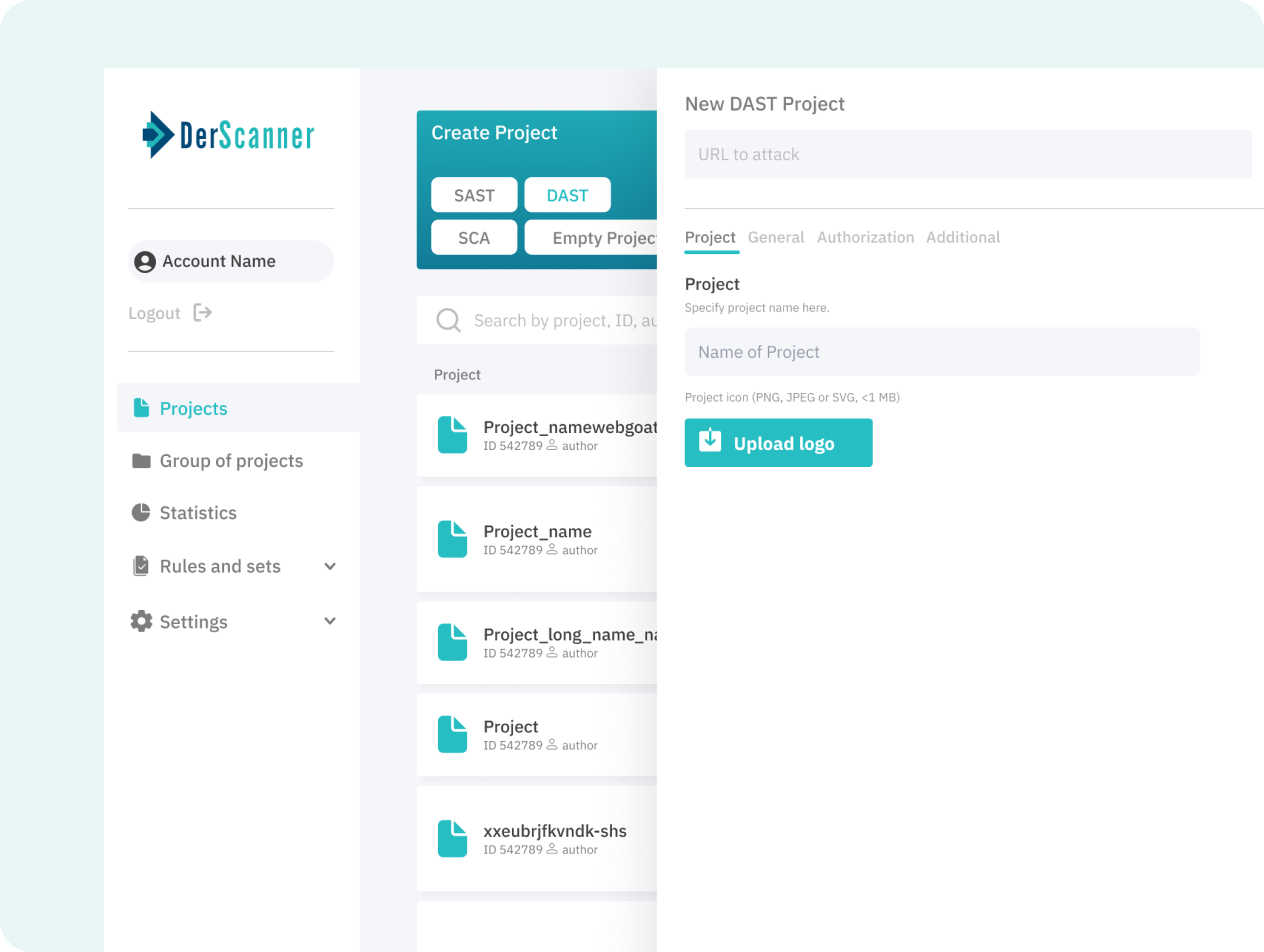
DerScanner DAST tool scans running applications. To find injections, XSS, authentication flaws, or misconfigurations that show up only at runtime, it sends requests to live web apps and REST APIs. No source code access is required: load an OpenAPI definition and the scanner will map endpoints automatically.
Dynamic application security testing (DAST) is a black-box method for running web applications. It simulates real attacks and sends requests to the live application through its exposed interfaces.
Find runtime issues like authentication gaps, session handling errors, server misconfigurations, or component interaction vulnerabilities. DAST can test third-party software and live production systems without access to source code.
Find common vulnerabilities early. Pentesters can spend past time on deeper, hidden issues instead of the obvious ones.
Run DAST scans as often as you need – daily, on every deploy, or on a schedule. Automated scanning keeps pace with your release cycle faster than pentest audits.
DAST clears out obvious findings before a human pentest begins. Pentesters get a pre-scanned environment and can focus on business logic and complex attack chains instead.
Fit DAST scans into your CI/CD pipelines. Flag issues before they hit production and get results in developer-readable reports – with remediation guidance.
DerScanner DAST scanner crawls the application surface, finds endpoints, and runs tests that simulate attacker behavior. It maps URL parameters, form inputs, and API routes from OpenAPI definitions to locate injection points and logic flaws.
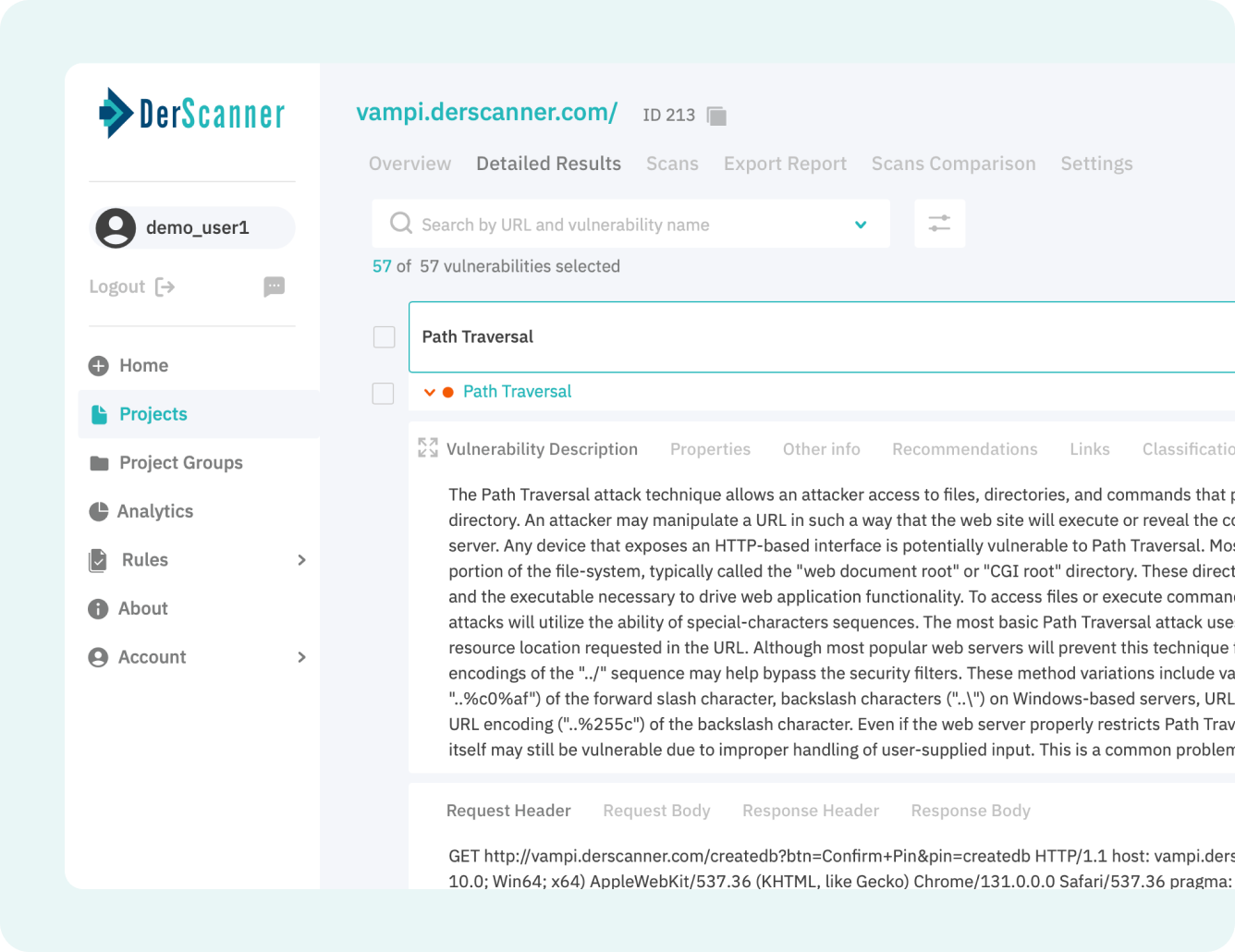
DerScanner accepts OpenAPI definition files or URLs to build a map of API endpoints. It tests each endpoint for injection flaws, broken authentication and access control problems without manual setup.
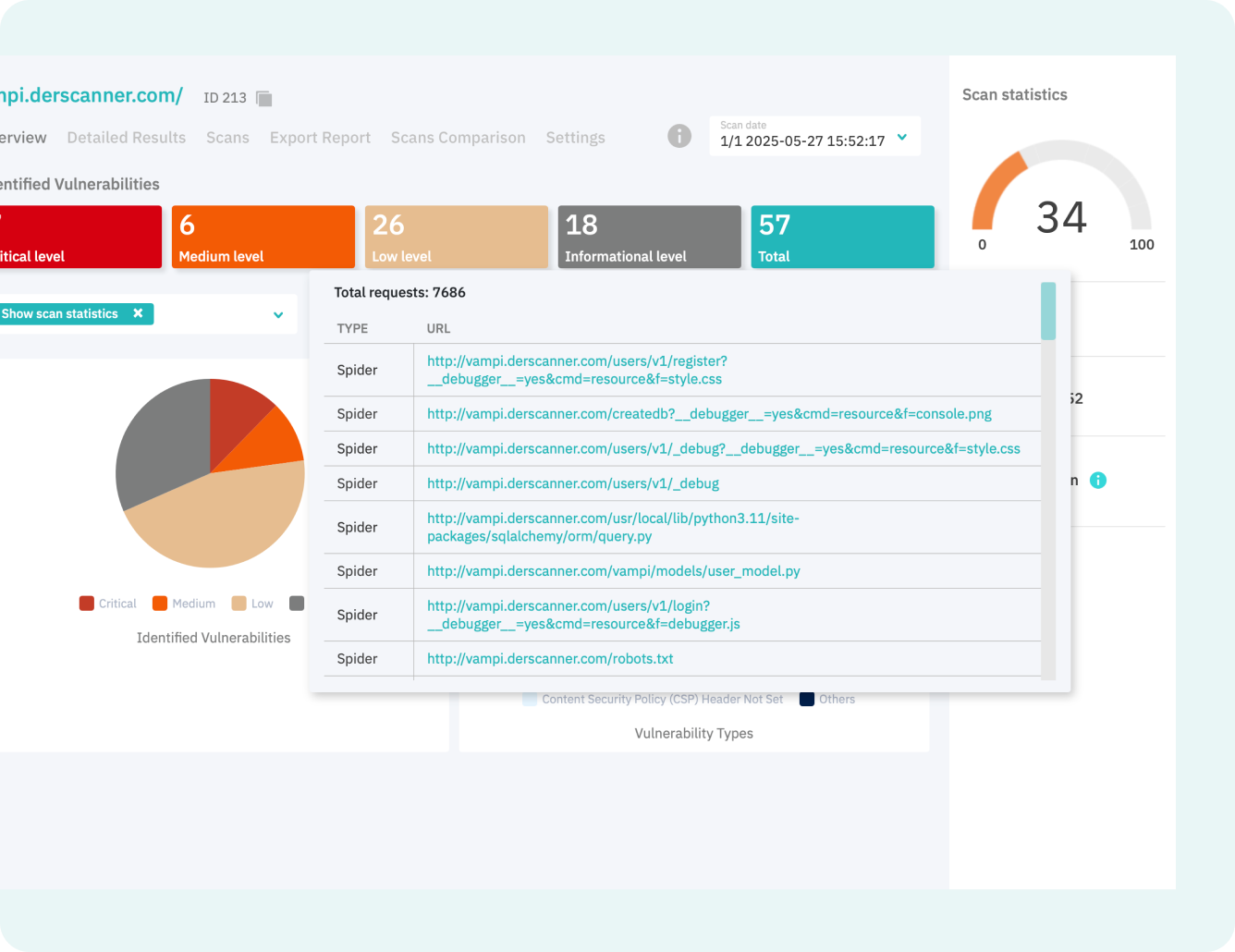
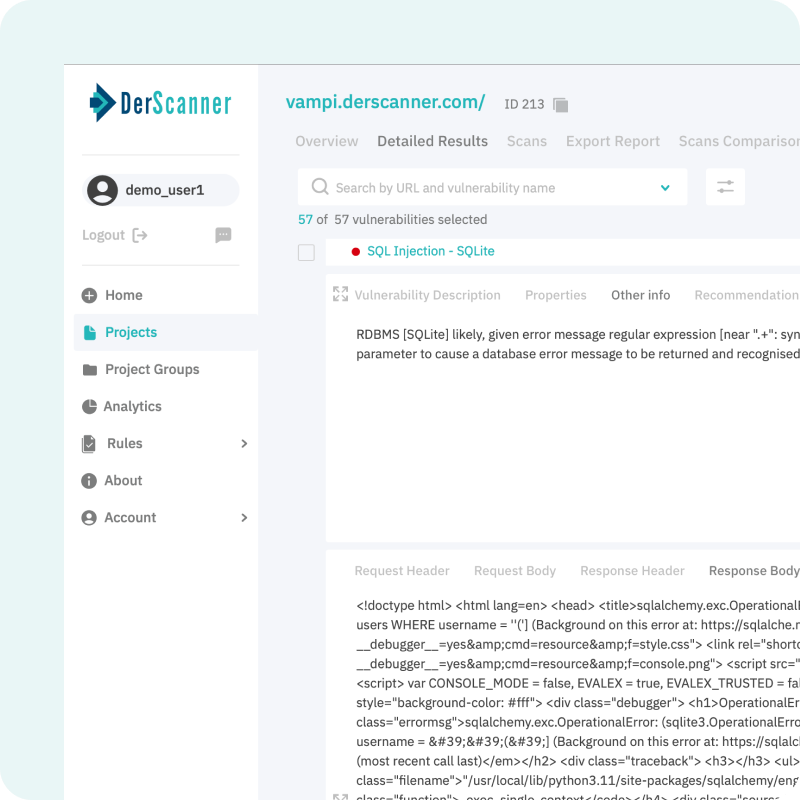
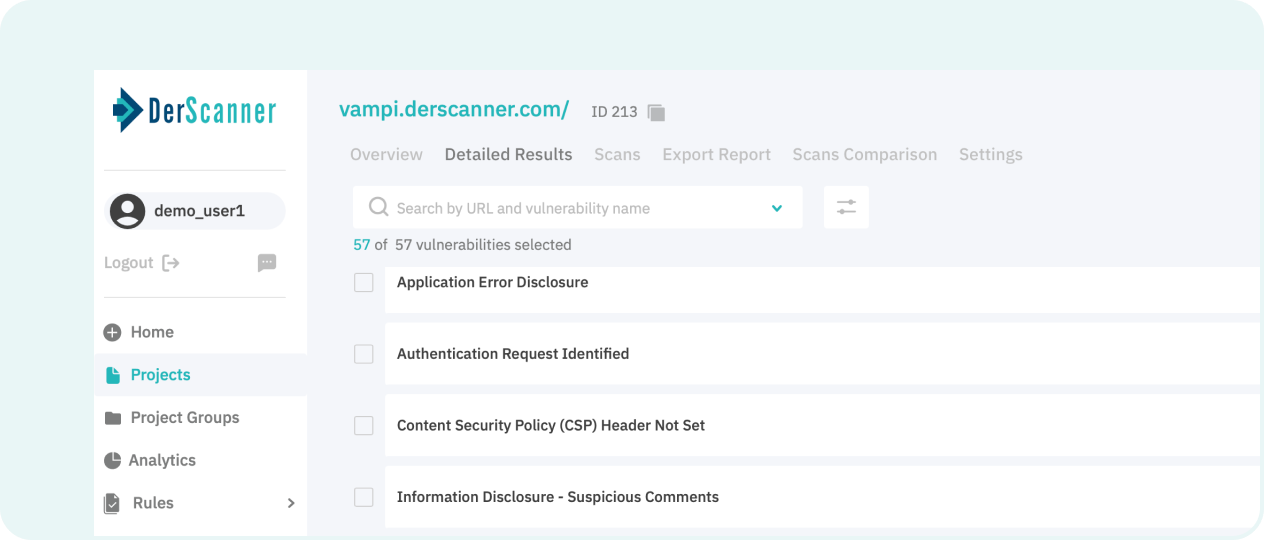
DerScanner DAST produces detailed reports, including the affected URL, the request that triggered the detection, server response, and severity level.
Findings are prioritized by criticality so security teams can focus on what matters most. Can be mapped to CWE, OWASP Top 10 x WSTG – turning runtime evidence into compliance-ready documentation.
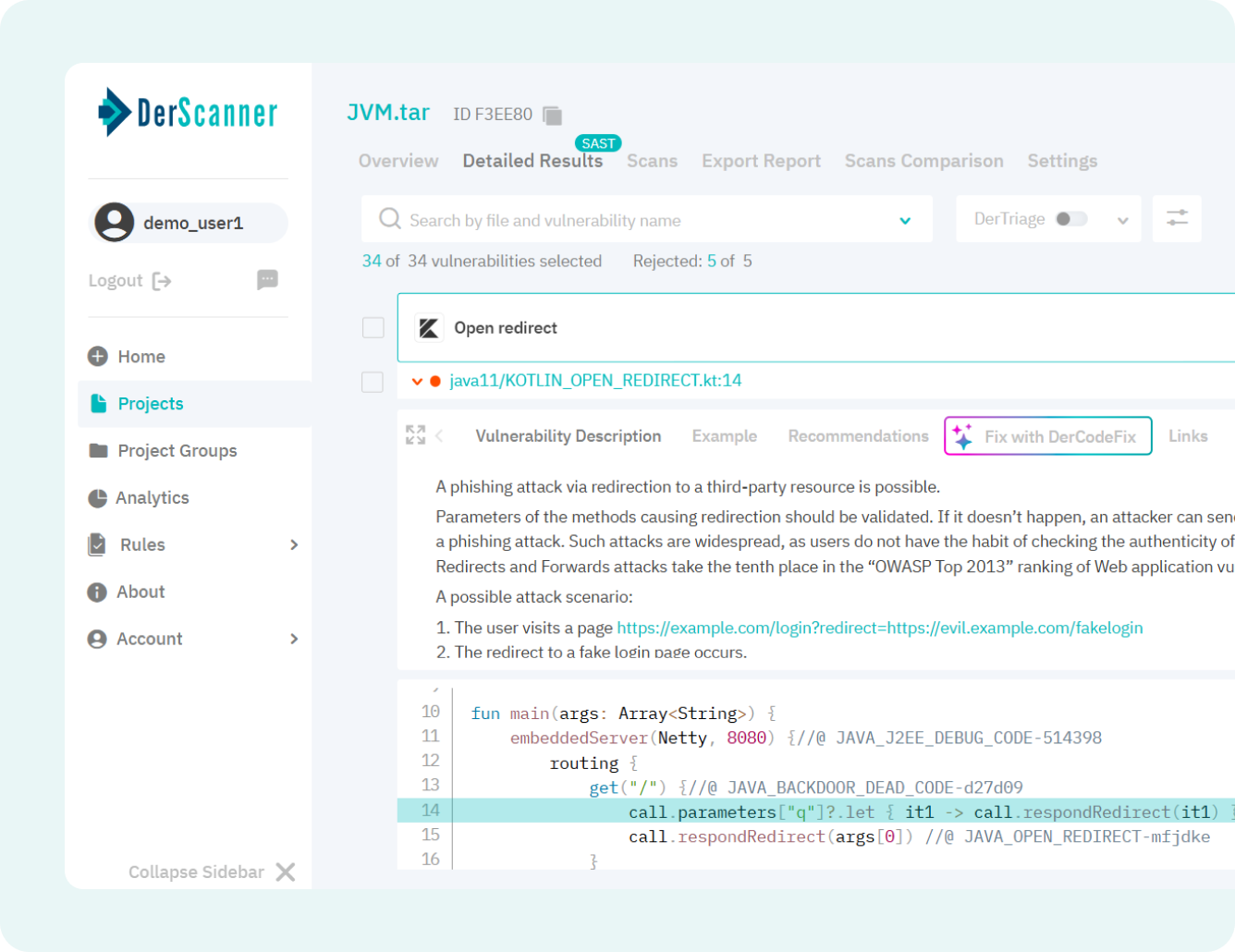
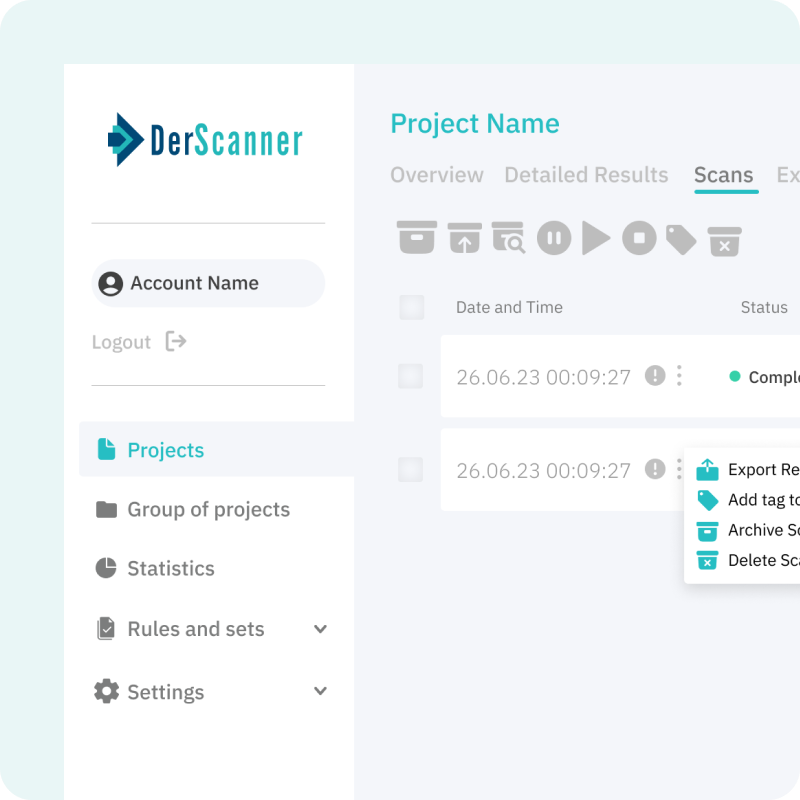
DerScanner DAST mimics real attackers to find vulnerabilities in your application environment.
Automated Crawl
Finds all reachable endpoints, including dynamic content, SPAs, and authenticated areas.
Attack Simulation
Runs security tests to find exploitable weaknesses.
Response Verification
Checks responses to confirm vulnerabilities and cut false positives.
Remediation Reports
Gives clear fix instructions for developers and security teams.
DAST tests applications while it is running – in staging, pre-production, or production. It finds flaws as they exist at runtime, not as they appear in source code.
Run tests after every deployment or on a recurring schedule. The more frequently you scan, the earlier you catch regressions.
DAST analyzes the running application from the outside. No access to source code, build artifacts, or repository credentials required. Works for third-party applications, vendor software, and legacy systems.
DerScanner includes several scanning modes, each designed for different types of web application behavior

Standard black-box testing that interacts with the application through its web interface, submitting payloads and analyzing responses.

Run scans automatically through CI/CD integrations. Configure scans to run on every deployment to staging or on a schedule defined in your pipeline, so security testing happens in step with the release cycle.

Handles asynchronous requests that load content without full page reloads – forms, shopping carts, subscription flows, and other dynamic UI elements.

Sends unexpected, malformed, and boundary-case inputs to forms, URL parameters, and API endpoints. Catches edge cases that standard payload libraries miss.
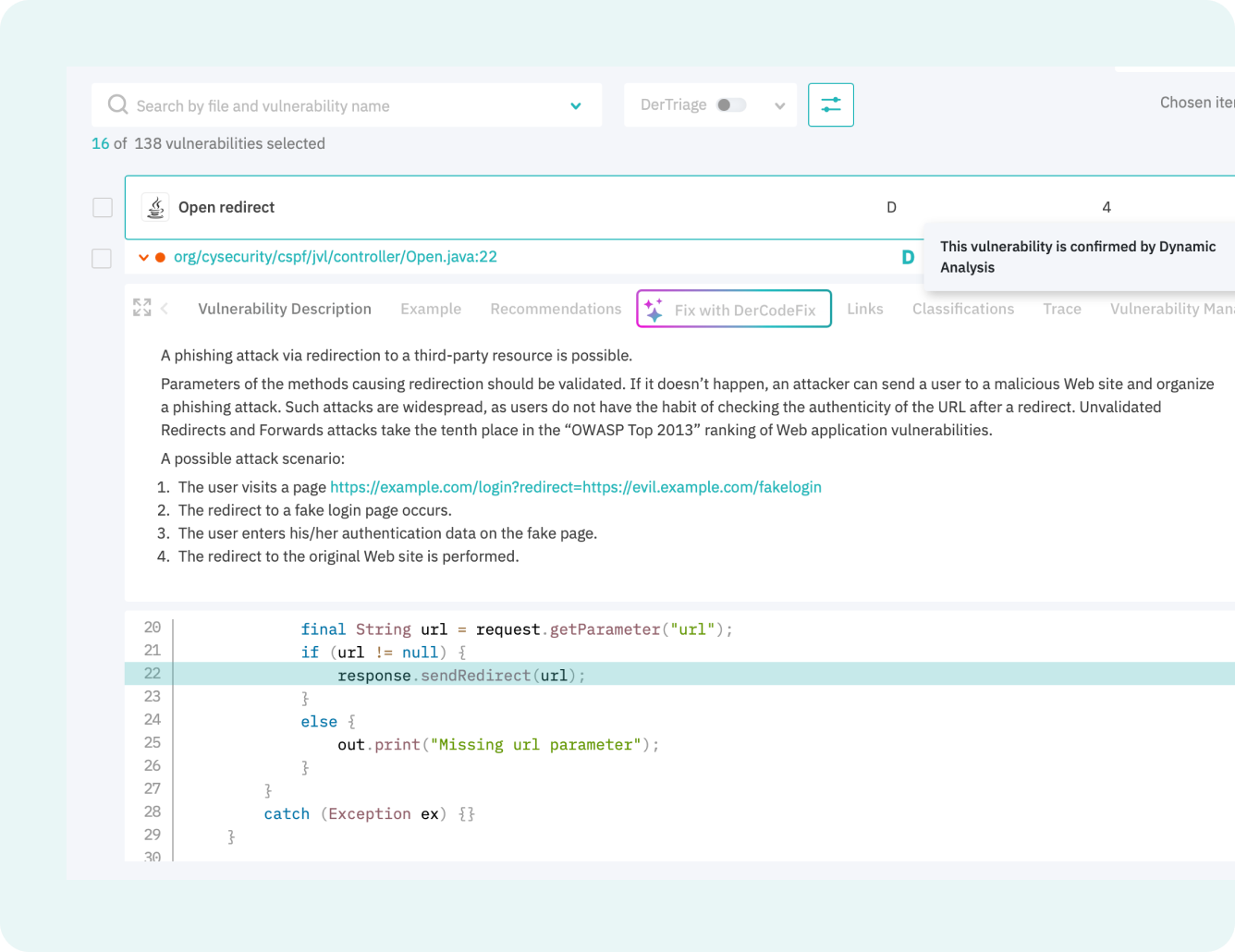
DerScanner’s IAST mode correlates SAST and DAST findings for the same application. When comparing DAST vs SAST results, IAST checks whether a vulnerability found in source code is reachable and exploitable at runtime. This cross-validation cuts the number of alerts that need manual review.
DerScanner DAST is available as an on-premise installation, with full air-gap support for sensitive environments.
Best for defense, finance, government, and other regulated sectors.
DerScanner integrates with Jenkins, TeamCity, Azure DevOps, and GitLab CI. DAST scans trigger automatically after deployment to staging.
Results are available in the DerScanner UI and via email reports – ready for review on the same day the change ships.
Every finding includes the affected URL, the HTTP method, the test payload, and the server response. Developers see exactly what the scanner sent and what came back, so they can reproduce, validate, and fix the issue without going back and forth.
DerScanner DAST and SAST results can be correlated through IAST mode.
Vulnerabilities found in source code are confirmed against runtime behaviour – and findings that are not actually reachable drop out of the priority list.

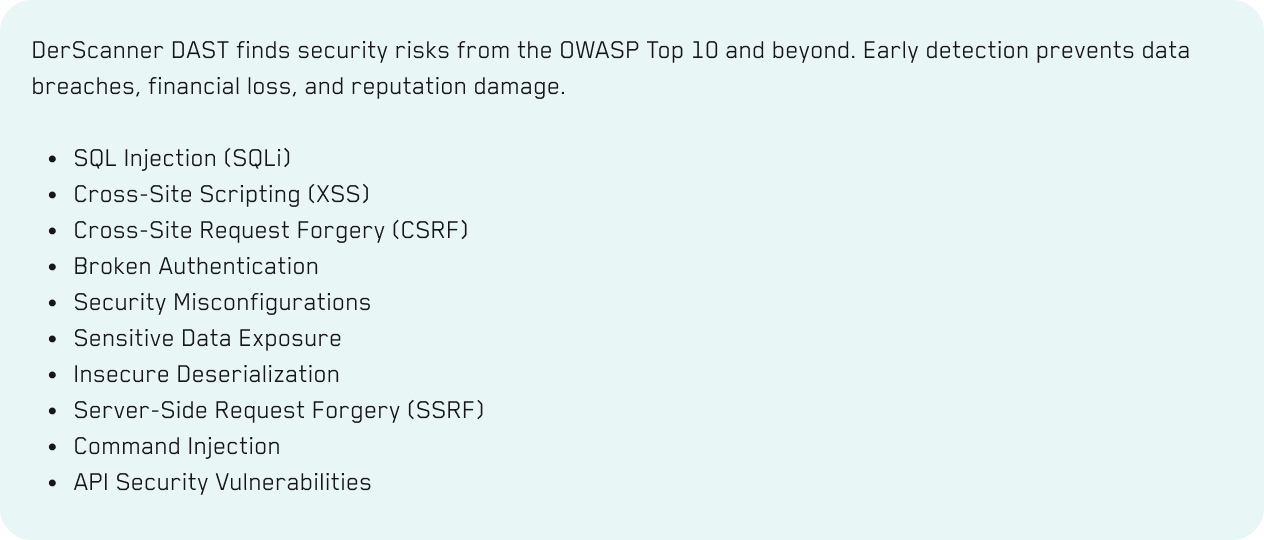
Web application attacks account for a large share of confirmed breaches (Verizon DBIR 2025). DAST finds the vulnerabilities that attackers actually exploit: injection flaws, authentication weaknesses, misconfigurations.

Automated DAST scans run inside CI/CD pipelines without blocking developers. Security testing happens in parallel with deployment, not as a gate at the end of a quarterly cycle.

PCI DSS, ISO 27001, and SOC 2 require evidence of application security testing. DAST scan reports document what was tested, what was found, and what was remediated – ready for the next audit.

Vulnerabilities found in staging cost a fraction of what they cost in production. Continuous DAST scanning catches regressions early, when the developer who introduced the change still has context.
Sign up for a personalized demo to see
how DerScanner can meet your Application Security needs