Perl Security Matters
Perl powers critical infrastructure across industries — from automation scripts to financial backends. But despite its presence in production, many security tools overlook it. Why language popularity shouldn’t dictate security coverage, and how DerScanner brings full static analysis support to Perl, closing a visibility gap.
Content
Make Your Applications Secure Today
Sign up for a personalized demo to see how DerScanner can meet your Application Security needs
Perl is a high-level, interpreted programming language created by Larry Wall in 1987. Known for its powerful text processing capabilities, it’s been widely used for automation, system administration, network scripting, and backend development. It supports multiple programming paradigms — procedural, object-oriented, and functional — and remains actively maintained with a massive ecosystem of modules via CPAN (Comprehensive Perl Archive Network).
Even today, Perl plays a vital role in real-world systems, including:
- Backend automation and infrastructure scripting
- Financial and billing applications
- Internal developer tools
- System utilities
- Web apps via frameworks like Catalyst
- Projects like Bugzilla, DuckDuckGo, and parts of Craigslist source
According to the 2025 Stack Overflow Developer Survey, 3.8% of developers actively use Perl, confirming its continued relevance across industries.
The Issue: Gaps in Security Visibility
Despite its presence in production systems, many security tools focus heavily on top-trending languages — JavaScript, Python, Java, and so on. These stacks receive extensive rulesets, IDE plugins, and CI/CD integrations. Perl? Rarely prioritized.
While some platforms offer basic support or regex-based scanning, true static analysis with Perl-aware rule engines is uncommon.
Perl deserves security too
Perl is used in automation, infrastructure, backend APIs, financial tooling, internal systems, and more. These are production workloads — business-critical, data-driven, and often tightly integrated across services.
They require the same level of security visibility as any other part of the stack. But most SAST tools prioritize only the most commonly used languages — leaving others, like Perl, under-protected.
That has real consequences, cause if it runs in prod, it should be scanned.
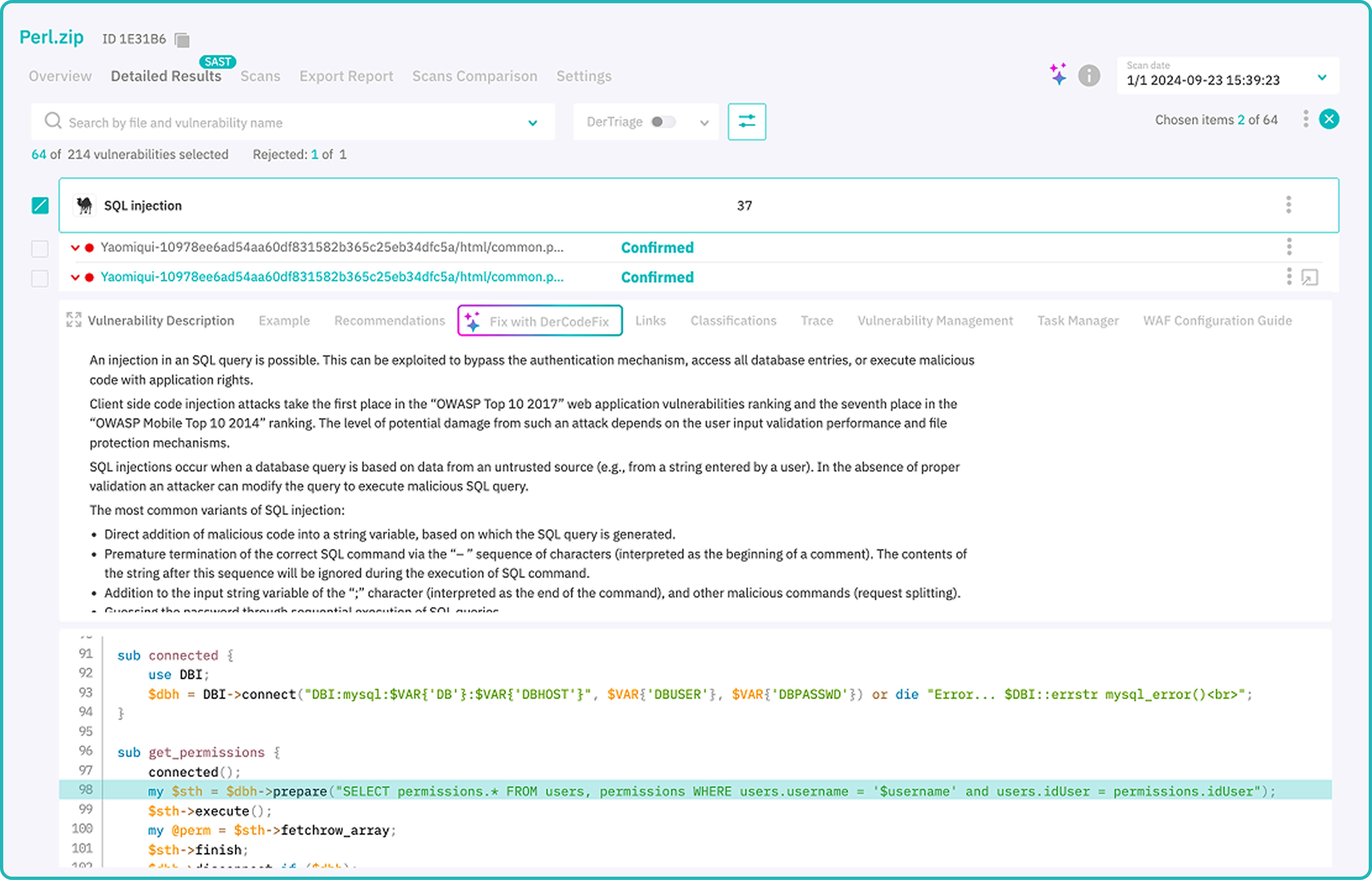
Security Risks Exist in Every Language
Whether your app is built with Java, Rust, or Perl, the risks are the same:
- Injection attacks
- Broken access control
- Sensitive data exposure
- File system misconfigurations
- Insecure authentication
- Hardcoded secrets
- XSS and CSRF flaws
Perl is no exception — and the fact that it’s less trendy doesn’t make it safer.
Full SAST Support for Perl
At DerScanner, we believe security coverage should not stop at mainstream stacks. Every production system deserves deep, contextual analysis.
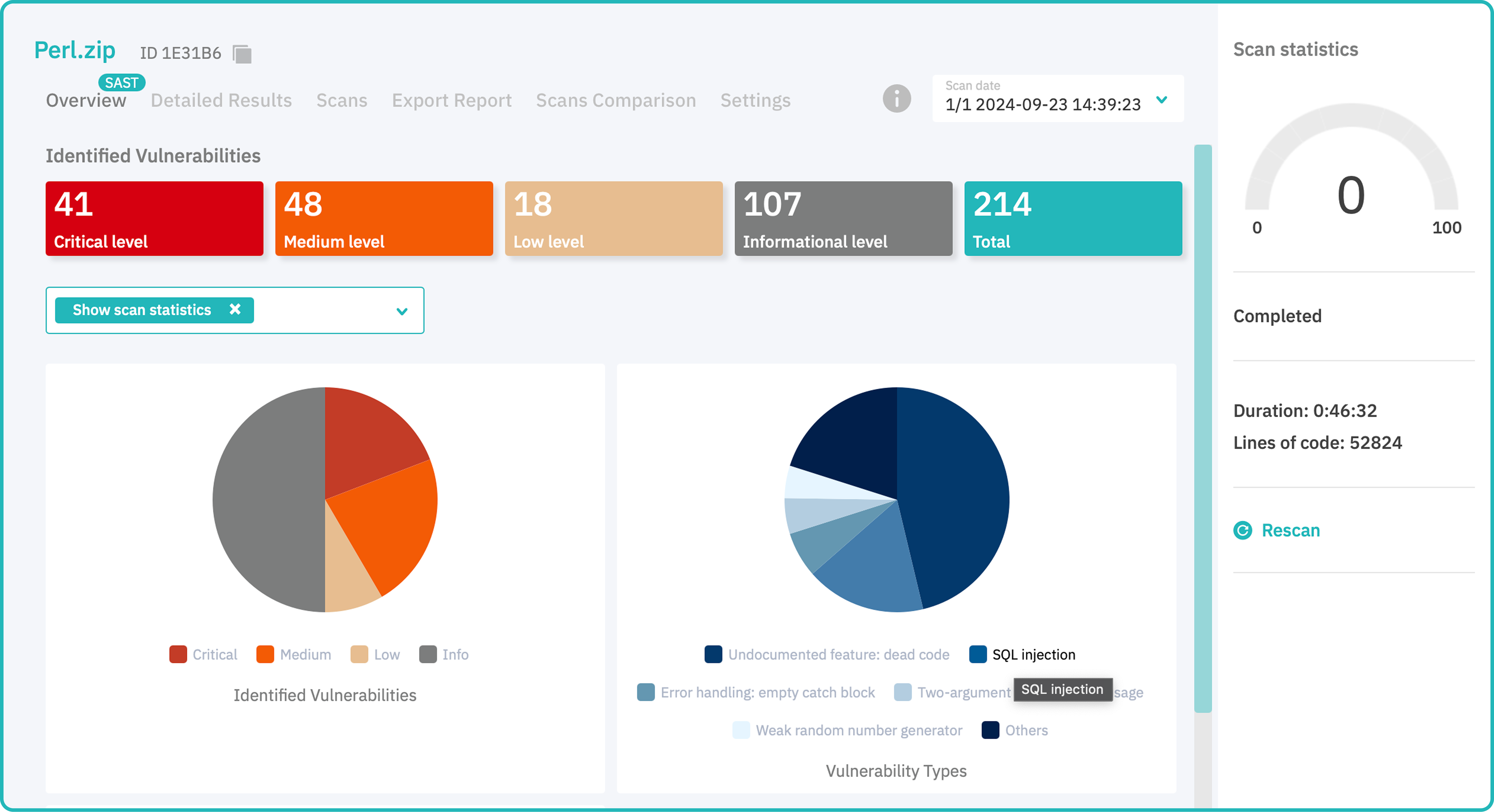
So we built dedicated static analysis for Perl, including:
- A custom ruleset for Perl syntax and patterns
- Detection for common and uncommon vulnerability classes
- Coverage for critical issues: injections, code flaws, access problems, leaks, insecure APIs, etc.
- CI/CD integration and simple reporting
We believe security reviews can’t stop at “popular” languages. Your programming language shouldn’t define security posture. They deserve the same level of protection as anything built in a top-10 language.
Ready to Reduce Technical Debt and
Improve Security?
Clean code. Fewer risks. Stronger software